
This article was originally written in August 2019 here.
While the world talks about the unfortunate manmade crisis that has developed in the Amazon, I try to understand EU policies that seek to tackle forest fires.
A Quick Summary of events in the Amazon
Brazil, though is a huge country, doesn’t have enough land required for farming. With almost 6 million families employed in this sector and 5% of the nations GDP coming from farming, the existing land available for cultivation amounts to 31% of all land in the nation. As this falls short of the demand, agriculturists and farmers proceed towards deforestation of the Amazon, to gain new breeding grounds for cattle and for purposes of agriculture. With most farming done by small household farmers with no capital, they resort to unsafe practices in order to obtain land for farming.
When the train for evolution came, the practitioners of Jhum Cultivation missed getting on board. First originated in the Neolithic age of 7000 B.C., Jhum Cultivation or Jhumming or Shifting cultivation is the practice of clearing vast swathes of land by burning the existing flora in the region and then plowing new crops right on top of it. This reduces the cost/effort in clearing land, and the need for natural fertilizers to aid crop cultivation as the plants that were previously burnt act as natural fertilizers. This practice has continued to exist even today, due to its inexpensive nature.
“It is our Amazon and we will decide what to do with it! The western countries have all cleared out forests and have developed ahead of us, now we will do the same. If they want afforestation, I advise them to do it in their own lands!” screams Jair Bolsanaro, the populist President of Brazil. Emanuel Macron, the President of France has expressed his opinion on this, claiming that western nations thatcut their forests in the urge for development are paying the price. These nations are working towards increasing forest cover over the last century. After World War 2, where most of the products in the world were made of timber, deforestation for wood was very common and hence the forest cover of Europe decreased significantly.
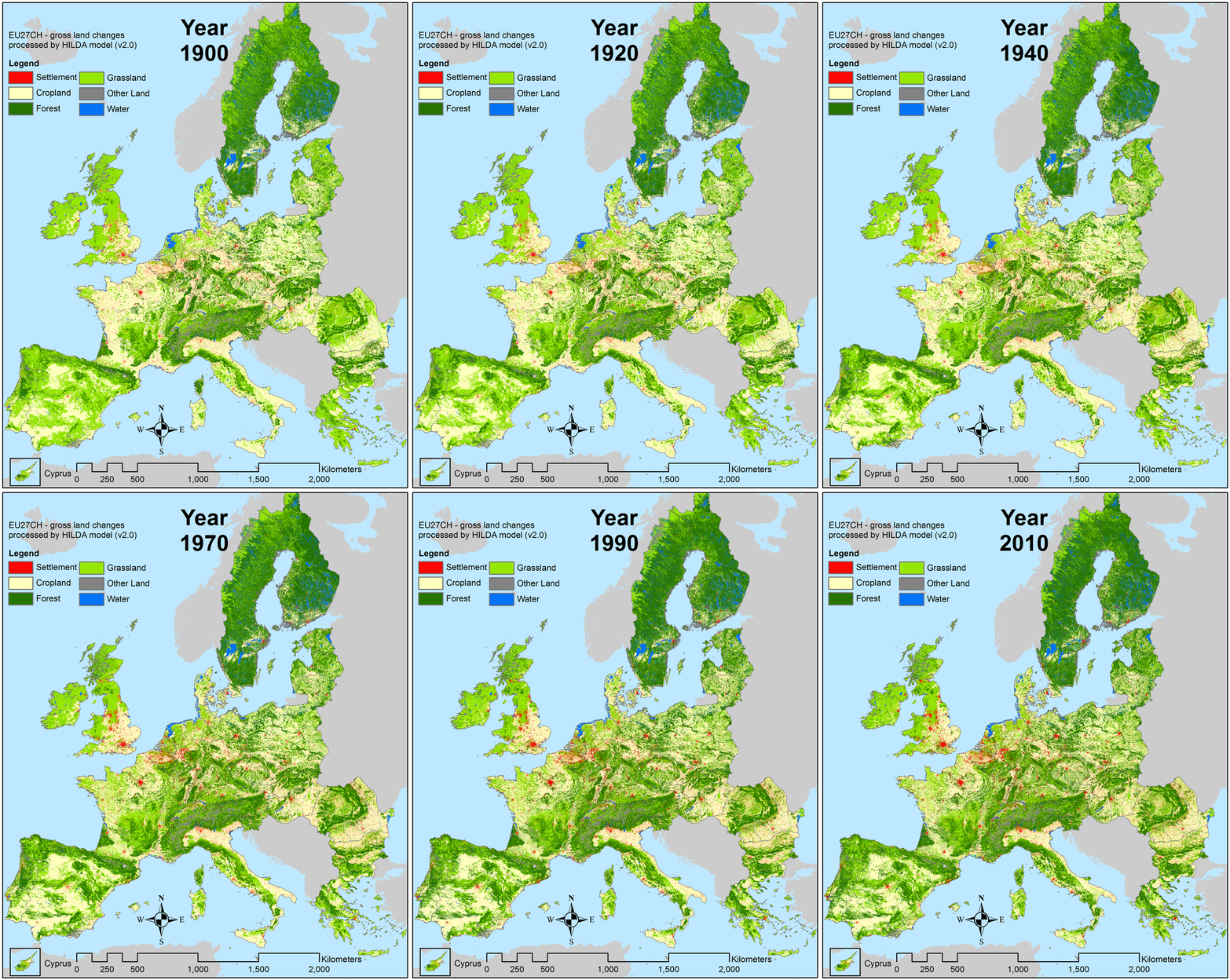
Source: Changing Face: Europe’s land cover in 1900 and 2010
http://www.geo-informatie.nl/fuchs003/#
Europe — How does it deal with Forest fires?
The European Region has recognized this and consequently promoted afforestation activities, especially after World War 2. There are certain policies that help ensure the forests of Europe continue to be protected and increased. With over 182 million hectares of land, nearly 45% of the land area of Europe is under forest cover, making it one of the most important natural resources in the continent. To protect and improve the conditions of this natural resource, the EU works based on its Common Agricultural Policy (CAP). The EU pays additional attention in helping its member states to tackle the problems faced by the forests in their regions, such as climate change, through its Forest protection strategies.
The tiny caveat here is that the formulation of forest policies is based on the competence of member states under the guidelines of a common policy framed by the EU. Based on the Thomas Report of the environmental committee of the European Parliament in 1995, recommendations were given for the development of a common European Forest policy. Consequently, in 1998, the European Commission adopted the Resolution on Forestry Strategy. This document is considered to be the fundamental political white paper for all member states for all issues regarding forest protection and preservation.
The Standing Forestry Committee of the EU takes care of these guidelines and supports all the member states in activities that involve forest protection and preservation. The biggest chunk of expenditure that forms the CAP, is farm subsidies. 37% of the budget of the EU in 2017, was alloted to the CAP, hence the EU has taken a clear stance on forest protection.
The State of Food and Agriculture, an annual report from the UN’s Food and Agriculture Organization, in its report published in 1990, identified Shifting Cultivation as one of the chief causes of deforestation in the world, and had actively advised all member states to discourage the use of this archaic farming practice. While climate change was a still nascent concept in the 1990s, air pollution in the EU region was at an all-time high.
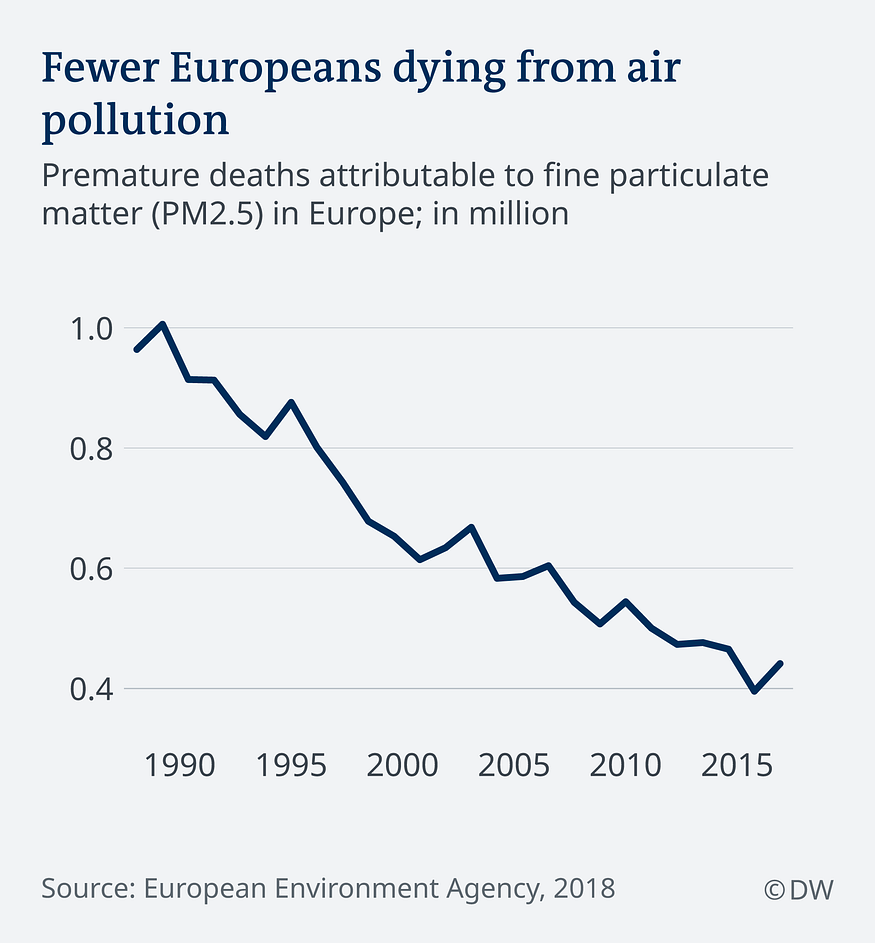
This is just deaths attributed to PM 2.5, without including other harmful gases such as Sulphur Oxides and Carbon oxides, besides other particulate matter in different sizes. The need to improve the air quality of the region was the primary reason for the rejection of the cheap yet environmentally degrading practice of Jhumm agriculture. With farm subsidies given in such large quantities, investment in environmentally friendly agricultural practices is encouraged by the EU and its member states. Therefore, it is safe to say that the presence of anthropological reasons for forest fires in the continent of Europe, is slim to none. Sadly, that doesn’t keep the EU immune to forest fires.
According to the Copernicus’ European Forest Fire Information System (EFFIS)With every year in the last 5 years being declared the hottest Europe has ever faced, summers in the continent have been extremely dry. The heatwaves occurring in the last few years exacerbate this condition. As of 15th August 2019, 1626 wildfires have been recorded in the EU in this year alone. This is more than 3 times the average over the past decade.

Southern European nations such as Italy, Spain, Greece, and Turkey are most prone to forest fires, along with regions in southern France. The EU Disaster Management system, rescEU had announced that it routinely sends out air support to these nations to combat forest fires.
Afforestation in Europe
The Joint Research Centre of the European Commission in a report warns that climate change would reduce moisture levels tremendously, and with regions becoming drier, weather-driven forest fires would see a significant increase. The report also mentions that the ‘fire season’ of Europe was becoming longer due to these changes in weather conditions. Furthermore, the rate of afforestation in the European Union has seen a considerable decrease in recent years. About one million hectares of agricultural land were afforested in the EU 15 during the period 1994–1999, approximately 700 thousand hectares between 2000 and 2007. The recently closed rural development (RD) programs for the period 2007–2013 contributed an additional 300 thousand hectares of forest in the EU 27 by the end 2015. The new allocation in the RD programs for 2014–2020 for the 28 Member States foresees approximately 510 thousand hectares of new afforestation. Data on the retention/growth of land that has been subjected to this afforestation program couldn’t be obtained, and that would have given a true measure of the success of the program. The rate of afforestation could see a logical fall over the years because there’s only so much land that can be reclaimed by forests.
Culture, could be the answer to Europe’s survival
In my opinion, In recent years, the culture surrounding forests and its protection have changed dramatically. After the 2nd world war, forests that were primarily viewed as a source of timber and wood now were seen as homes to varied species of flora and fauna, natural cleansers of air and noise pollution, and natural barriers to prevent draughts and flash flooding. Some regions of Europe, Germany for example, began to find a sense of national symbolism in its forests. The German Black forest in the region of Bavaria is one such example. Furthermore, with activists such as Greta Thunberg creating an atmosphere of climate hostility, to highlight the need to act with urgency against the irreversible effects of climate change, an increasing number of people are taking note. The recent European elections show a similar trend, with the Green Party and its climate-focused agenda, making huge electoral gains. In major metropolitan cities such as Brussels, Berlin, and Dublin, the Greens were declared the largest party in the respective cities. Therefore, it is safe to say that discussions on climate change have moved away from the hallowed corridors of Brussels into bars and coffee shops of these cities. Well, not bars, but we’re getting there!
The continent of Europe and its leaders have realized their mistake in treating Forests as a mere source of timber. Evidence, through policies and culture, shows that sizeable amount of work is being done to counter and prevent forest fires. But the questions that remain are, is the EU doing enough to combat the bigger problem of Climate Change? And more importantly, will the world and science skeptic leaders like Jair Bolsanaro, be with the EU, or against it.